14 July 2026
Pre-Monsoon Farm Equipment Checklist: Get Your Machinery Ready
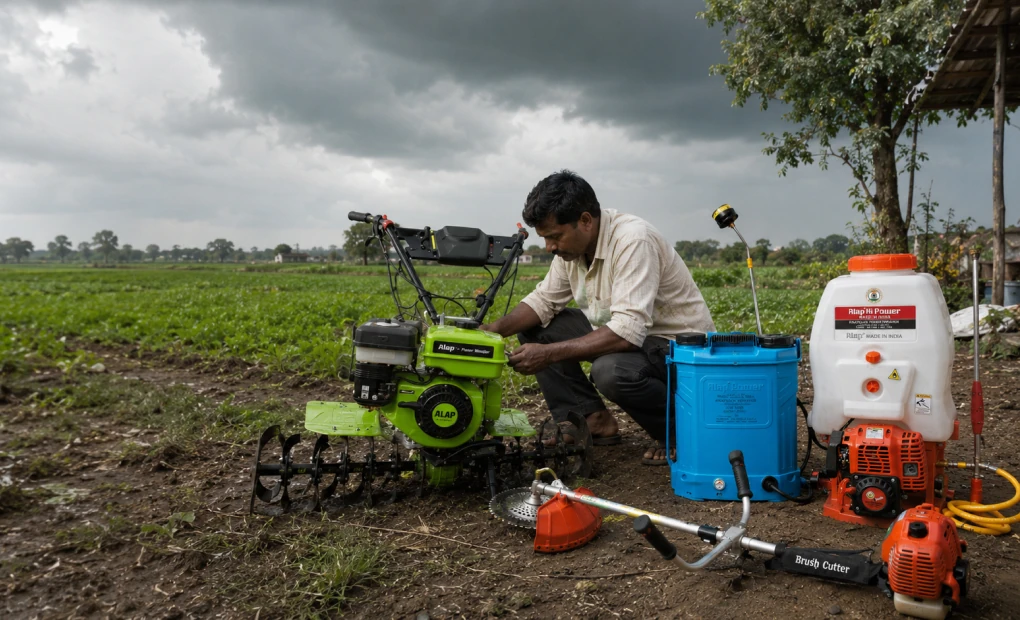
The weeks before the monsoon are the busiest quiet you'll ever have. The fields aren't flooded yet, the sowing rush hasn't started, and there's still time to walk into your equipment shed and take a hard look at the machines you're about to depend on for the next four months.
It's tempting to skip this. Most of us do - until the sprayer dies halfway through a pesticide round, or the water pump refuses to start on the one morning the field is waterlogged. A breakdown in June is not the same as a breakdown in January. During the season, every lost day costs you crop, labour, and peace of mind.
So here's a simple, machine-by-machine checklist to get everything ready before the first heavy rain. Half a day of checking now saves you weeks of trouble later.
Start with your sprayers
Once the rains begin, pest and fungal pressure on kharif crops climbs fast. Your sprayer is going to be one of the hardest-working machines you own, so it's the first thing to check.
For a battery sprayer, test the battery backup on a full charge - a battery that only lasted half a tank last season won't survive monsoon workloads. Run water through it and watch the nozzle and lance for weak spray or blockage. Check the tank and all the seals for slow leaks, because a hairline crack you ignore now becomes a soaked back and wasted chemical in July. Keep a spare nozzle set aside; it's the part that fails most often and the easiest to replace.
If you run a power sprayer or HTP sprayer for orchards and tall crops, check the pump pressure, the hoses, and the fittings. A pressure drop usually means worn seals - cheaper to fix now than mid-season. And if you keep a manual sprayer as backup, give it the same once-over - a simple machine still won't help you if its seals have dried out over winter.
Get your power weeder and tiller season-ready
Weeding and inter-culture work pick up sharply once the rains soften the soil, and waterlogged ground is far harder to work if your machine isn't running clean.
Check the rotary blades and back-rotary attachment for wear - dull or bent blades waste fuel and leave the job half done. Change the engine oil, check the fuel, and inspect the belt and starter. If you use a 7 HP power weeder with different attachments, make sure the fittings still seat properly and you have the blades you'll actually need for the season. Worn blades are cheap to replace and worth stocking before the rush.
Don't forget the brush cutter
Monsoon makes weeds and grass explode along bunds, field edges, and channels - exactly the places a brush cutter earns its keep. It's one of the first machines farmers reach for once the rains start, so get ahead of it.
Check the brush cutter blade for sharpness and replace it if it's chipped or worn. If you run a 2-stroke machine, mix the fuel correctly - a wrong mix is the most common reason a brush cutter runs rough or won't start. Clean or replace the air filter, and test the cord and starter. These are small jobs that take ten minutes and prevent a dead machine on a day you can't afford one.
Service the water pump before you need it
The monsoon asks two things of your pump: fill the field when the rain is short, and clear the water when it's too much. Either way, a pump that won't prime on the day you need it is a real problem.
Prime and test the water pump before the season, not during it. Check the suction and delivery hoses and their seals for cracks. Inspect the petrol or diesel engine - oil, fuel, and starter. And make sure the pump you have actually matches your field: the right horsepower and the right inch size make the difference between clearing water fast and watching it sit.
Stock your spares now, not later
This is the step almost everyone skips, and it's the one that saves the season. The parts that fail - nozzles, blades, seals, filters, starter cords - are cheap and small, but a missing one can stop a machine for days when every dealer nearby is busy. Buy the fast-moving spare parts before the rush. With a wide dealer network across India, genuine ALAP and MILAP parts are usually available close to home - but it's still smarter to have them in the shed than to go looking for them mid-monsoon.
The quick checklist
Here's the whole thing in one glance - save it, print it, or send it to a fellow farmer:
- Battery sprayer: battery backup, nozzle and lance, tank and seals, spare nozzle set
- Power / HTP sprayer: pump pressure, hoses, fittings, seals
- Power weeder / tiller: blades and attachments, engine oil, fuel, belt, starter
- Brush cutter: blade sharpness, fuel mix, air filter, cord and starter
- Water pump: prime and test, hoses and seals, engine, correct HP and size
- Spares: nozzles, blades, seals, filters, cords - stocked before the season
Repair or replace? A quick way to decide
Not every machine is worth saving. If the frame and engine are sound and it just needs servicing and a few parts, service it - it'll run for years more. But if you're losing days to repeated breakdowns, or the repair costs are creeping toward the price of a new machine, replace it before the season, not in the middle of it. The worst time to shop for a new sprayer is the week you needed it working.
For over four decades - since 1977 - farmers across India have trusted ISI-marked, FMTTI-certified ALAP and MILAP machines to stand up to exactly this kind of season. Made in India, built for real fields, backed by service and spares near you.
Getting ready for the season?
Find your nearest dealer, or call/WhatsApp us for the best price on the machines on your checklist. Contact Us
Frequently asked questions
1. Which farm equipment should I service before monsoon?
Start with the machines you'll use most once the rains begin: your battery and power sprayers, power weeder or tiller, brush cutter, and water pump. Check each for wear, test that it runs, and stock the spares that fail most often.
2. Battery sprayer or manual sprayer for the rainy season?
A battery sprayer covers more area with less effort and keeps pace with the heavy pest pressure monsoon brings, which matters when you're spraying often. A manual sprayer is simpler and has fewer parts to fail. Many farmers keep both - the battery sprayer for daily work and a manual one as backup.
3. What affects the price of a power weeder in India?
Engine power (HP), build quality, the attachments included, and after-sales support all affect price. A slightly higher upfront cost for a certified machine with spares and service nearby usually works out cheaper over the seasons.
4. How do I keep my brush cutter running through the monsoon?
Use the correct fuel mix, keep the air filter clean, check the blade regularly, and store it dry between uses. Most monsoon brush cutter problems come down to a wrong fuel mix or a clogged filter - both easy to prevent.
5. Where can I get genuine spare parts near me?
Genuine ALAP and MILAP spares are stocked through a dealer network across India. Contact us and we'll point you to your nearest dealer for the parts you need.


