05 November 2026
Agriculture Water Pump Guide: 2-inch vs 3-inch & How to Choose
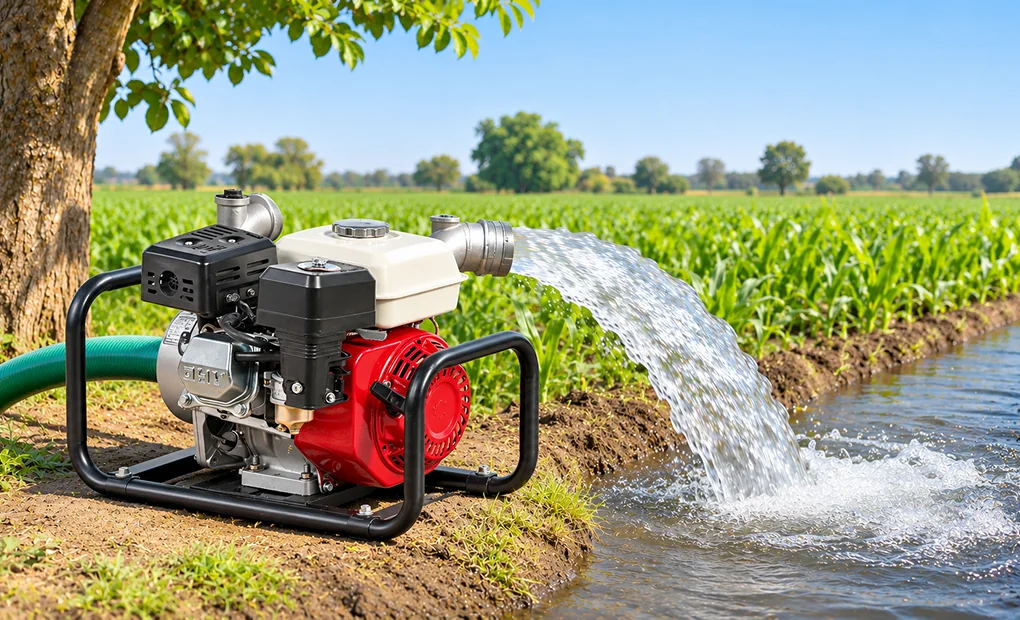
A water pump is the quiet backbone of irrigation, but farmers often buy the wrong size and then struggle with weak flow or wasted fuel. The usual choice is between a 2-inch and a 3-inch agriculture water pump. This guide explains the difference, what suction and delivery head mean, and how to pick the right pump for your water source and field.
What an agriculture water pump does
An agriculture water pump lifts water from a well, canal, pond or tank and pushes it through a pipe to your field or tank. Most portable farm pumps are petrol or kerosene centrifugal pumps that are light, self-priming and easy to move between plots. The two numbers that decide a pump are its size (2-inch or 3-inch, meaning the pipe diameter) and its power, which together set how much water it moves and how high it can push it.
2-inch vs 3-inch water pump: the main difference
The inch size is the diameter of the suction and delivery pipe. A 2-inch pump moves less water but needs less power and fuel, so it suits small plots and shorter distances. A 3-inch pump moves much more water per hour, which suits larger fields and longer or higher delivery, but it uses more fuel and costs more. Bigger is not always better: a 3-inch pump on a tiny plot just burns extra fuel.
Point | 2-inch pump | 3-inch pump |
Water moved | Lower flow per hour | Much higher flow per hour |
Best for | Small plots, short distance, kitchen gardens | Larger fields, longer or higher delivery |
Fuel use | Lower | Higher |
Weight and price | Lighter, cheaper | Heavier, costs more |
See both sizes in the ALAP agriculture water pump range.
Suction head and delivery head: why they matter
Two heights decide whether a pump will work for you. Suction head is how high the pump has to pull water up from the source to the pump. Delivery head is how high it then pushes the water to your field or tank. Add them up as the total head: the higher the total, the more power you need and the less water you get per hour. If your well is deep or your field is uphill, check that the pump is rated for that total head before buying.
How to choose the right water pump
Start with four questions: how far down is the water, how far and how high does it need to go, how big is the area you irrigate, and what fuel do you prefer. For a small plot with water close by, a 2-inch petrol pump is light and economical. For a few acres, a deeper source or a longer pipe run, a 3-inch pump moves water fast enough to finish in time. Match the pump to the job, not to the biggest number.
Petrol pump care and safety
Prime the pump with water before starting so the impeller is not run dry, keep the suction pipe free of air leaks and the foot valve clear of mud, and use clean fuel and oil. Do not run the engine dry, service the air filter, and store the pump dry between seasons. A pump that is primed and maintained starts easily and lasts years.
Frequently asked questions
Which is better, a 2-inch or 3-inch water pump?
Neither is better in every case. A 2-inch pump suits small plots and short distances with lower fuel use; a 3-inch pump moves much more water for larger fields or longer, higher delivery. Match the size to your area and water source.
How much water does a 3-inch pump move?
A 3-inch pump moves considerably more water per hour than a 2-inch one, which is why it suits larger fields. The exact flow depends on the engine power and the total head, so check the pump's rating.
What is suction head and delivery head?
Suction head is how high the pump pulls water from the source up to the pump; delivery head is how high it then pushes water to your field. The total of the two decides the power you need and the flow you get.
Which water pump is best for a small farm?
For a small plot with water nearby, a 2-inch petrol pump is light, economical and easy to move. Step up to a 3-inch pump only when the area, distance or lift is larger.
Why does my pump give weak flow?
Usually an air leak in the suction pipe, a pump that was not primed, a clogged foot valve, or a total head higher than the pump is rated for. Check these before assuming the pump is faulty.
Is there a subsidy on water pumps?
Many states include irrigation pumps in farm machinery or irrigation subsidy schemes. Check your eligibility with the Krishi Yantra subsidy checker.
Flow, head and fuel figures vary by model, engine and field conditions. Confirm the current specification and price on the product page before buying.


