05 November 2026
How Much Rice from 1 Quintal (100 kg) Paddy? Milling Recovery
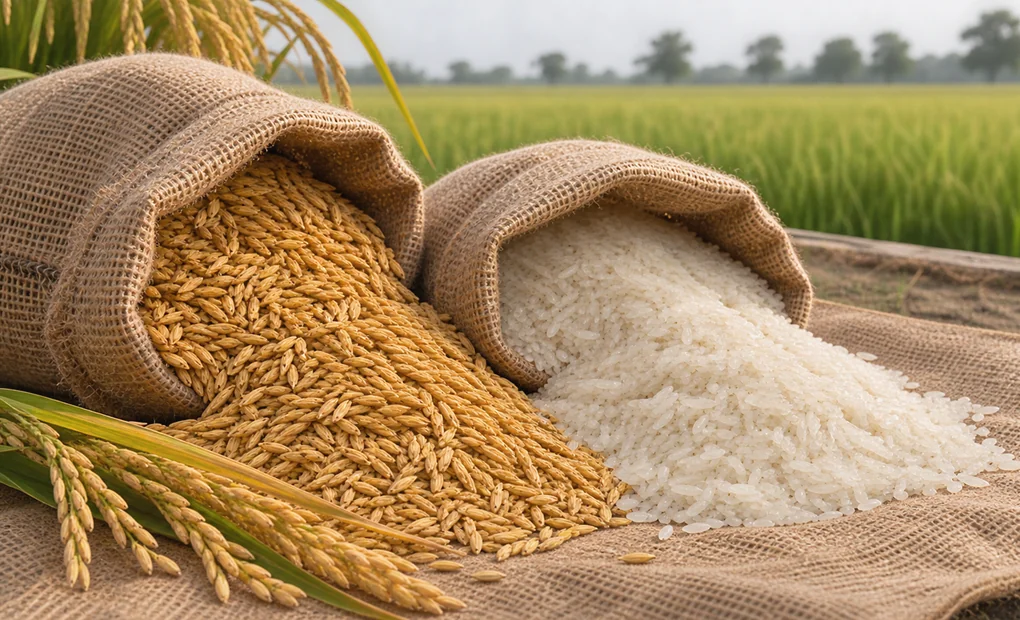
After harvest, every paddy grower asks the same question: how much rice will one quintal of paddy actually give? The short answer is about 65 to 67 kg of rice from 100 kg of paddy, but the real number depends on your variety, the moisture of the grain and the type of mill. This guide explains the milling recovery, what eats into it, and how a good mill protects your rice.
How much rice do you get from 1 quintal of paddy?
On average, 100 kg (1 quintal) of paddy gives about 65 to 67 kg of milled white rice. The rest is husk, bran and a small loss. So from a tonne (10 quintals) of paddy you can expect roughly 650 to 670 kg of rice. This is called the milling recovery, and a well-run mill keeps it at the higher end while a worn single-pass huller drops it with more broken grains.
From 100 kg paddy | Approx. weight |
Milled white rice | 65 to 67 kg |
Husk | 20 to 22 kg |
Bran and polish | 8 to 10 kg |
Loss and dust | 1 to 2 kg |
To work out the rice from your exact quantity, use the paddy to rice calculator on the farming calculator page.
What decides the milling recovery?
Four things move the number up or down: the paddy variety and how well the grain filled, the moisture at milling, the mill type, and how much you polish the rice. Fine, long-grain varieties often give a little less whole rice than short, bold grains. A mill set up for your paddy and kept in good condition gives more whole rice and less broken.
Why moisture matters so much
Paddy should be dried to around 13 to 14 percent moisture before milling. Too wet and the grain squashes and breaks in the mill; too dry and it cracks and turns to broken rice. Both cut your recovery and your price, because broken rice sells for less than whole rice. Dry the paddy evenly in the sun or a dryer and let it rest before milling.
Whole rice versus broken rice
Total milling recovery is not the full story. What pays is the head rice yield, meaning the whole, unbroken grains. A single-pass huller strips and whitens in one go, which is fast but produces more broken grains and more heat on the rice. A modern mill with a rubber-roll sheller and a separate polisher removes the husk gently and keeps more whole grains, so you earn more from the same paddy.
Milling at home or at a custom mill
Many farmers still carry paddy to a custom mill and pay by weight or give a share of the bran and husk. A small mini rice mill on the farm changes the maths: you mill when you want, keep the bran for cattle feed, control the polish, and avoid the cut a custom mill takes. For dairy and poultry farmers the bran alone is a useful by-product. Read the mini rice mill guide to see the sizes and how to choose one, or view the rice mill range.
Simple ways to get more rice per quintal
Dry the paddy to the right moisture and not below it, clean out stones and straw before milling, set the mill for your variety, and service the rollers and polisher so they are not worn. Mill in the cooler part of the day and do not over-polish, because every extra bit of polish takes away rice as bran. Small steps add up across a season.
Frequently asked questions
How much rice comes from 1 quintal of paddy?
About 65 to 67 kg of milled white rice from 100 kg of paddy, with the rest as husk, bran and a small loss. A well-run mill keeps it at the higher end.
How much rice from 100 kg paddy?
Roughly 65 to 67 kg of rice. For a full tonne of paddy that is about 650 to 670 kg of rice, depending on variety, moisture and mill type.
Why do I get less rice and more broken grains?
Usually the paddy was too wet or too dry at milling, or the mill rollers are worn. Dry the paddy to 13 to 14 percent moisture and service the mill to get more whole rice.
What moisture should paddy be for milling?
Around 13 to 14 percent. Wetter grain squashes and breaks, drier grain cracks, and both lower your recovery and price.
Is a mini rice mill worth it for a farmer?
If you grow paddy every season, a mini rice mill lets you mill on your own time, keep the bran for cattle feed, and avoid the cut a custom mill takes. See the mini rice mill guide to pick the right size.
Is there a subsidy on a rice mill?
Many states include rice mills in farm machinery subsidy schemes. Check your eligibility with the Krishi Yantra subsidy checker.
Recovery figures are typical averages and change with variety, moisture, mill type and polishing. Use them as a guide and confirm with your own paddy and mill.


